2020: A YEAR OF DISASTERS

Coronavirus-in-India

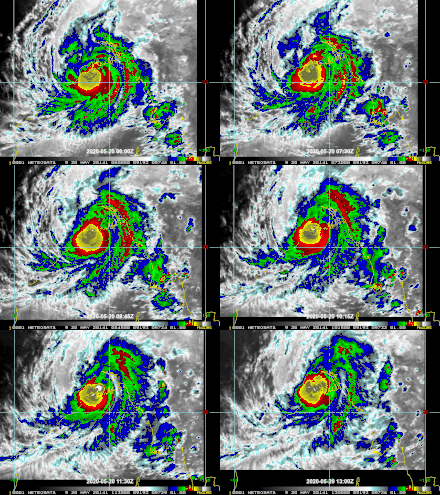
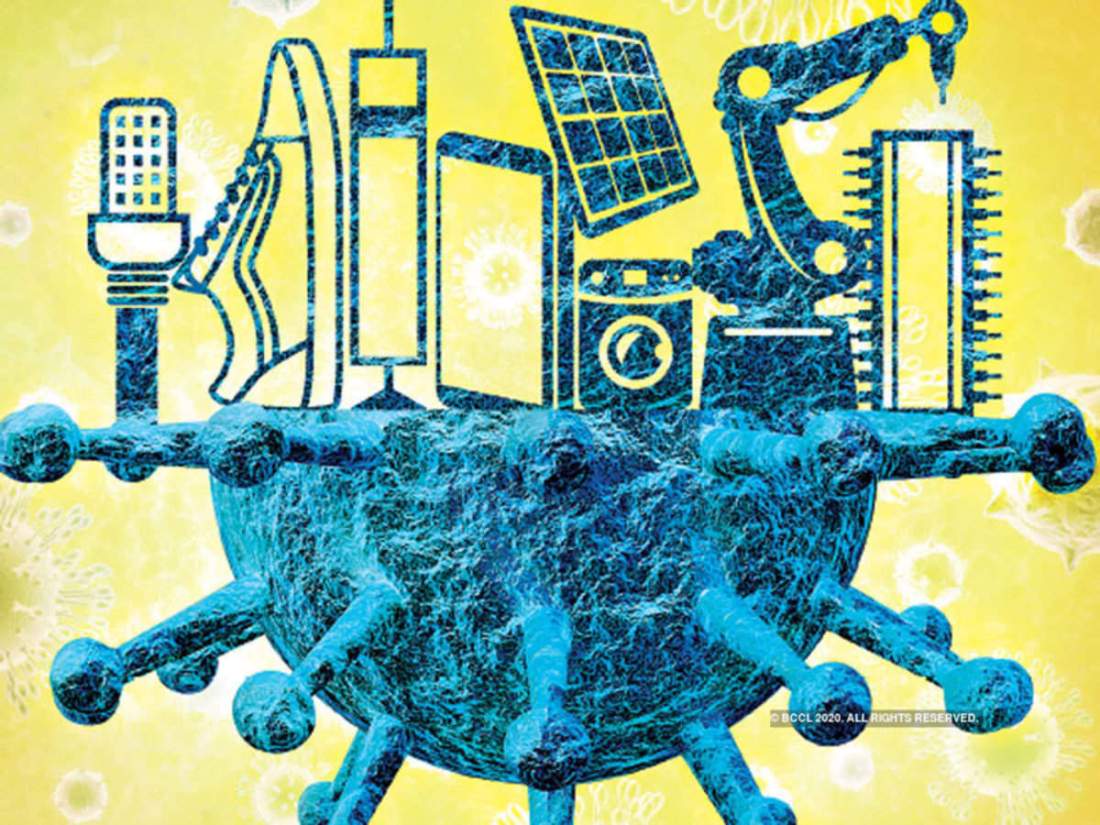
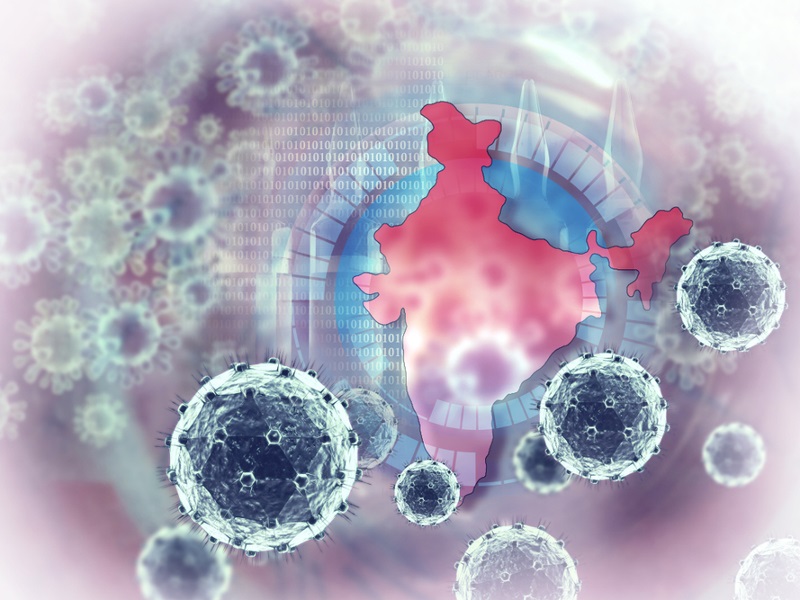
2020 began with the same zeal & resolutions like every other year.For many it was going to be the same mundane year which would just add an unit to their age but for some it was going to be a year of opportunities. An opportunity to get a good job, an opportunity to start one’s own business, an opportunity to enjoy a very good harvest but everything was delayed if not ruined by an unprecedented & highly contagious RNA virus originated in the wet markets of Wuhan named as Corona Virus Disease i.e COVID-19. The virus stepped it’s foot in India just after two months of the new year celebrations. The disease choked out farmers of their harvest, graduates of their Jobs and entrepreneurs of their dreams like it chokes out human body out of life. Corona a type of Severe Acute Respiratory Syndrome i.e SARS virus blocked trachea of world economy ,also robbing Prime Minister Modi of his 5 trillion dollar economy’s dream. Adding to this event Super Cyclone AMPHAN with devastating wind speeds of over 260 kmph had started to shape it’s eye in the Bay of Bengal sea and it spread havoc on the eastern coastline on India amidst the Corona crisis. The grief was as if not enough that another news of the most severe LOCUST attack in three decades rattled Indian farmers.These three overlapping events have cemented year 2020 to go down in books as a year of disasters for India.

Now we will briefly discuss the economic repercussions of these events.
XO7JazR5eHLCzTEqbg33Y4iacXzkcYO4-OLGsLRAULo

a) Corona virus and it’s impact

Capture

  • A significant 53 per cent of Indian businesses indicate the marked impact of the COVID-19 pandemic on business operations even at early stages.
  • The pandemic has significantly impacted the cash flow at organizations with almost 80 percent reporting a decrease in cash flow.
  • The pandemic has had a major impact on the supply chains as more than 60 per cent respondents indicate that their supply chains were affected. The companies also highlighted that they are closely monitoring the situation and expect the impact of the pandemic on the supply chain to worsen further.
  • During the lock down, an estimated 14 crore (140 million) people lost employment. More than 45% of households across the nation have reported an income drop as compared to the previous year.
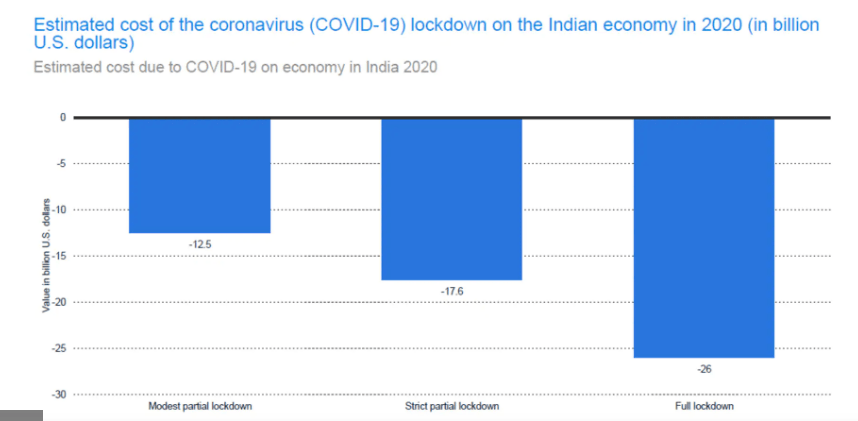
  • The Indian economy to lost over ₹32,000 crore (US$4.5 billion) every day during the first 21-days of complete lock down.
  • India’s economy is predicted to shrink by 5% .
  • 15.6 million people in south Asia are going to be pushed below poverty line.
  • The price of a barrel of West Texas Intermediate (WTI), the benchmark for US oil, fell as low as minus $37.63 a barrel.
  • Economists all over the world are predicting worse economic conditions than great depression of 1930.

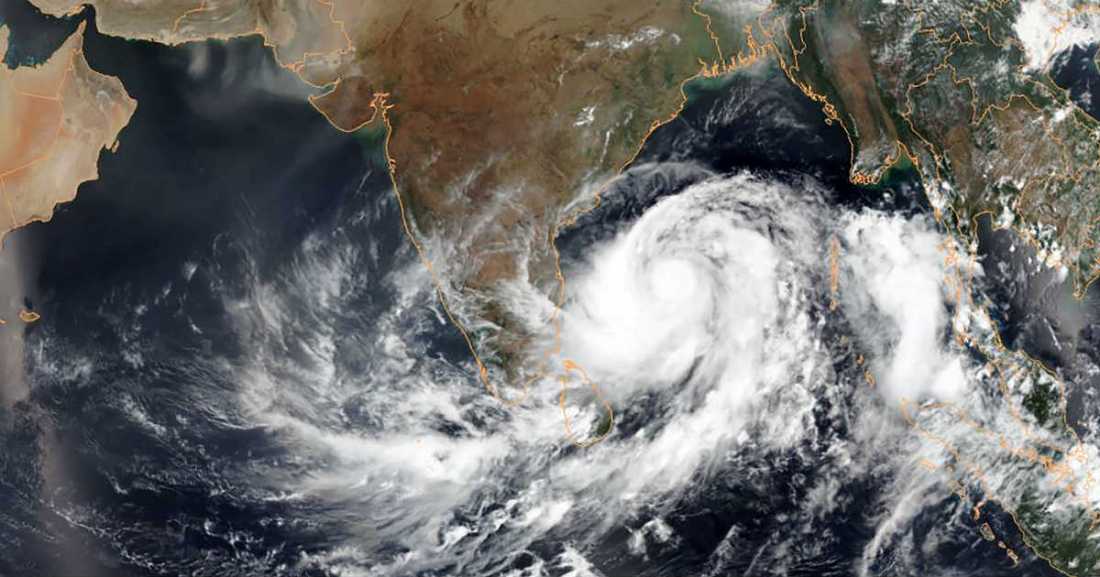
b) Cyclone Amphan & it’s impact-
Cyclones-in-India-seas-fb

220px-Cyclone_Amphan_making_landfall

  • West Bengal is one of the largest contributors to India’s national mango output of around 22 million ton (mt) that is near 40% of global yield. Incidentally all the mango producing zones in West Bengal like districts of Malda, Murshidabad have been hit by cyclone and around 2.5 lakh people are dependent on this perishable fruit.
  • Kolkata, home to almost 15 million people, bore the brunt of Cyclone Amphan, which tore roofs off buildings, smashed windows, pulled down trees and pylons and overturned cars.
  • An estimated damage of 13.2 billion has been predicted by various international sources.

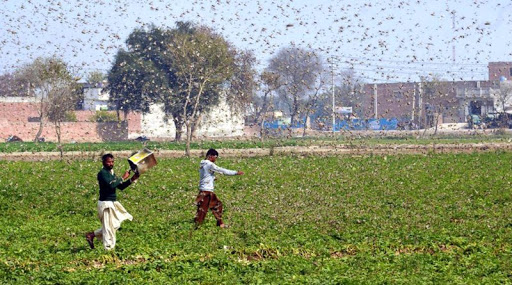
c)Locust attack-
unnamed

  • A swarm the size of Delhi may consume the same amount of food in one day as every inhabitant in Rajasthan or Madhya Pradesh in one day.
  • A swarm of desert locust containing around 40 million locusts can consume (or destroy) food that would suffice the hunger need of 35,000 people, assuming that one person consumes around 2.3 kg of food every day.
  • It can cause severe crop damage which will get amplified due to this corona crisis.Damages can sore up as high as 10 crore or even more than that.

THANK YOU.

Source- India Today, mausam.imd.gov.in, McKinsey & Company.
Article 370 Explained!!!

What Article 35(A) means
Article 35A allows the state legislature to define the Jammu and Kashmir’s permanent residents. The article had been inserted via the Constitution (Application to J&K) Order, 1954. It was issued by the then President Rajendra Prasad under Article 370 on PM Nehru’s advice.

The state’s Constitution, at the time of its adoption in 1956, defined a permanent resident as someone who was a state subject on May 14, 1954, or who has been a resident for 10 years, and has lawfully acquired immovable property.

What this clause means is that no outsider can now own property in J&K or get a state job.

The article is also known as the Permanent Residents Law. Among other things, it deprives the state’s female residents of property rights if/when they marry an ‘outsider’. The provision also extends to children born of any such women.

HISTORY OF ARTICLE 35A & 370

In October 1947, the then Maharaja of Kashmir, Hari Singh, signed an Instrument of Accession after pak army’s attack, it specified three subjects on which Jammu & Kashmir would transfer its power to the government of India:
1. Foreign affairs
2. Defence
3. Communications
In March 1948, the Maharaja appointed an interim government in the state, with Sheikh Abdullah as prime minister. In July 1949, Sheikh Abdullah and three other colleagues joined the Indian Constituent Assembly and negotiated the special status of J&K, leading to the adoption of Article 370. The controversial provision was drafted by Sheikh Abdullah.
Other princely states which signed the instrument of accession, signed a similar accord but without such provisions.
SPECIAL STATUS WHICH ARTICLE 370 GAVE TO J&K
Article 370 gave some special perks to J&K which no other state enjoys. It also has hindered development of kashmir over years. This special clauses are
1) Separate flag for the state of Jammu & kashmir.
2) Dual citizenship for citizens of        kashmir.
3) No non-citizen of kashmir could buy land or property in kashmir.
4) A kashmiri girl marrying any non-kashmiri citizen except someone from pakistan would also be deprived of kashmiri citizenship.
5) Any law ratified by central government could not be implemented unless approved by state legislature if kashmir.
6) Financial emergency and CAG audits couldn’t be invocked in kashmir.
Revoking article 370 now has abbrogated all this provisions. It was extremely important for nation’s and kashmir’s benefit to scrap the article which was initially decided to be for a temporary or a transient period. 70 years of transient period was more than enough to parent the article.
NEED TO REVOKE THE ARTICLE 
The article had become a bone of contention for Indian government over the years. It
1) Impedimented any investments into the region from Indian or foreign investors, thus hindering growth, jobs and development of region.
2) unilateral favoritism which residents of J&k got from Indian government.
3) Increase in corruption as no audits would  be conducted.
4) Conducive environment for terrorism, which was also fluxed by brainwashed and jobless youth picking arms against state for money.
5) Private universities and education hubs couldn’t be established thus barring youth from quality education and thus free and fair flow of ideas restricted thus not inclining youngsters towards Republican of  India.
6) It lead to control of state and its policies to be taken by few families and one’s enjoying there patronage.
7) Another important reason was the problematic kashmir valley only formed 11% of the area of J&K, rest were peaceful regions seeking deep rooted one nation  alliance with India. And because of valley other two regions i. e  Jammu & Ladakh region also had to suffer
Besides this there were  reasons like discontent amongst Indian citizens over kashmir issue and recurring losses of human lives in the valley. All this led to bold and historic decision of scrapping the law and setting the track right. 
IMPACT OF THE DECISION 
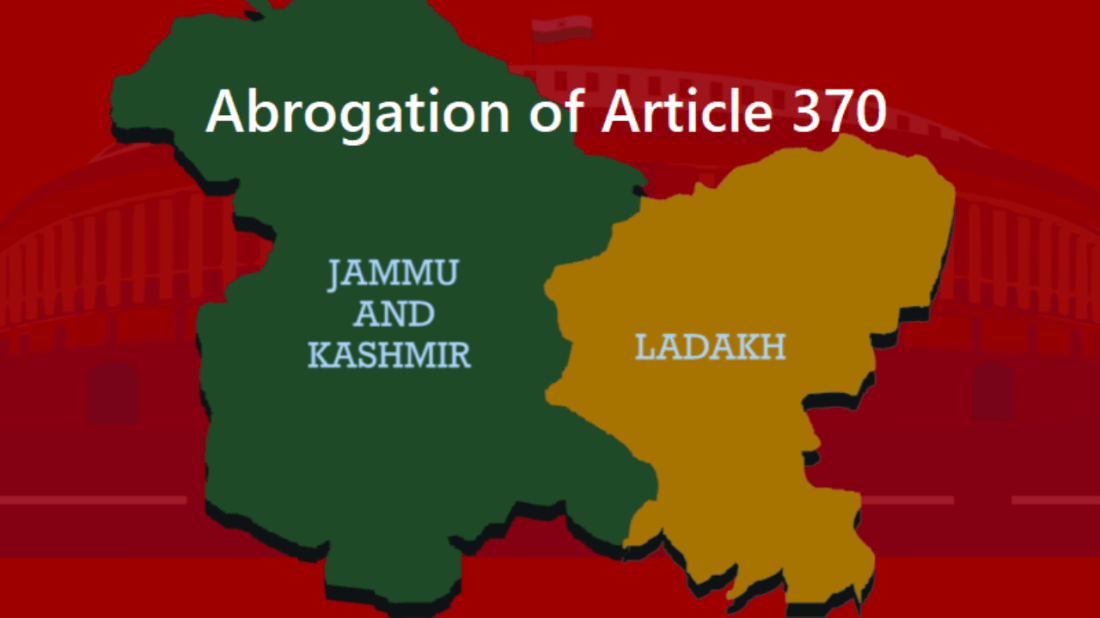
Dividing State of Jammu & Kashmir into union territory of Jammu & Kashmir and union territory of ladakh will come up with economic challenges for Ladakh than for J&K. Also unrest in valley will prevail until citizens see its benefits. Terrorist activities are suspected to increase in the region and also in the country. 
Moreover how does international community reacts to this decision will too be interesting to see. This move has strengthened India’s claim over kashmir and wrecked pakistani hopes of settling the kashmir issue. The decision also comes soon after Donald Trumps claims of PM MODI requesting his US counterpart to act as mediator in the issue. It has also been seen by many analysts  as a tight slap to Mr. Trump.
The decision without will prove to good for India in long run and bring kashmiri youth closer to India.
Thank you!!!

KULBHUSHAN VERDICT : BATTLE YET TO WIN!

INTRODUCTION TO THE CASE

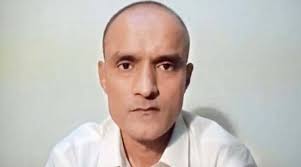
Mr. Kulbhushan Jadhav was captured by Pakistan in March 2016 and tried in a military court which pronounced its judgment on charges of espionage and terrorism in April 2017. India moved the ICJ in May 2017 challenging the Pakistani military court judgment.

Pakistan claims that Kulbhushan Jadhav was arrested from its restive Balochistan province on March 3, 2016. Pakistan claimed that Kulbhushan Jadhav entered Balochistan from Iran for espionage.

India, on the other hand, refuted Pakistan’s version of the incident saying that Kulbhushan Jadhav was abducted by militants from Chabahar area of Iran where the retired naval officer has business interests.

The militants handed over Kulbhushan Jadhav to Pakistani agencies for money. India then sought consular access to Kulbhushan Jadhav but Pakistan denied it saying that Indian authorities would try to extract information from its spy.

Though Pakistan denied India consular access, the sustained pressure from New Delhi saw Islamabad allowing a meeting of Kulbhushan Jadhav with his mother and wife in Islamabad on December 25, 2017.

International Court of Justice’s verdict on Kulbhushan Jadhav has proven to be a diplomatic victory for India. In today’s landmark judgment given by ICJ, Judges ruled in favor of Kulbhushan by 15:1, the single counter vote against courts order to revoke and review pakistan’s courts decision was given by Ad Hoc of Pakistan. Highlights of the order were

  • The ICJ on Wednesday stayed execution of sentence passed to Kulbhushan Jadhav
  • Court order to review the decision.Directed pakistan to give counselar access to Mr. Jadhav.

POSITIVE ASPECTS FOR INDIA

  ICJ suspended the death penalty awarded to Kulbhushan Jadhav by the Pakistani military court. Secondly, the ICJ ruled that Pakistan will have to review the entire process of trial and conviction of Kulbhushan Jadhav.

It directed Pakistan to take all measures at its disposal to ensure that Mr Jadhav is not executed pending the final decision in the present proceedings. The court considers that a continued stay of execution constitutes an indispensable condition for the effective review and reconsideration of the conviction and sentence of Mr Jadhav.

 ICJ noted that Pakistan breached the obligation incumbent upon it under Article 36 of the Vienna Convention on consular relations. This means that Pakistan has now to provide India consular access to Kulbhushan Jadhav.

Why Mr. Jadhav is not a spy? 

Former Indian Navy officer was claimed to be in service officer and a RAW agent by pakistan and thus accused to be perpetrating unrest activities in Baluchistan and Pakistan.

  • Mr. Jadhav was commissioned in the year 1991 and joined National Defence Academy in 1987, if he would have been in service when he was caught he least would had been a CAPTAIN or COMMODORE after 26 years of service. But he is still a commander which is a Lt. Col equivalent rank.
  • He retired in year 2001 and there are service records of it.
  • If we assume he was an RAW agent, then it will be very difficult to explain why such a senior officer of RAW was doing on field as it is not a practice amongst SPY agencies.
  • He was found with an Indian passport, why would RAW who can easily forge a pakistani passport would send its spy with Indian passport in pakistani territory.
  • The region where pakistan claims he was found, has absolutely no vegetation and no people. So assuming he was involved in terrorist activities there is impractical. Rather charges of smuggling would had been more implicable as that border region is renowned for it.

Next challenge for India and Mr. Harish Salve, will be to make pakistan adhere to ICJ’s decision. Pakistan rarely has a choice to not to abide by the decision as

  • It’s International image is at stake.
  • It has violated Vienna convention.
  • Death penalty to an innocent Former Indian Navy officer, would resent relations to further low and could even cause skirmishes between the countries.
  • In times of economic crisis pakistan cannot afford to worsen its relationship with India nor India’s allies.

Indian diplomats should continue with its stern stance to bring its citizen home. Jai Hind!!!

Iran -US conflict and it’s Impact on India.

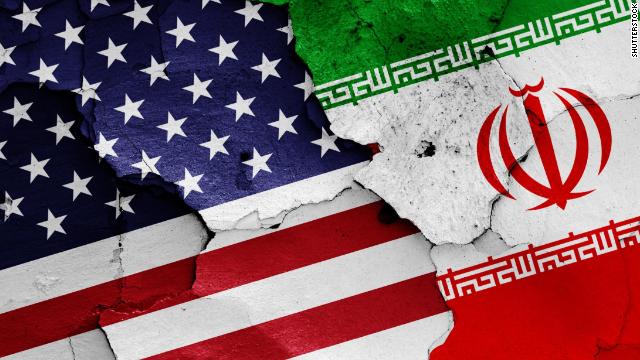
The US and Iran are at loggerheads since the 1979 Islamic Revolution, which witnessed the overthrow of the Shah, an American ally in the Middle East, and brought Iran under a clerical regime antagonistic to the US and its involvement in regional politics.US sanctions in the 1980s and 1990s were intended to check Iran’s regional activities and compel it to cease support for terrorism. After the discovery of Iran’s clandestine nuclear programme, the US focus shifted to preventing Iran from acquiring nuclear weapons. Thus, the Iran Non-proliferation Act (later renamed Iran-North was enacted to prevent transfer of material and technology that can help Iran acquire weapons of mass destruction (WMDs). But despite US sanctions, International Atomic Energy Agency (IAEA) reports detailing Iran’s violation of the Non-Proliferation Treaty (NPT) was signed in 1970, and UNSC resolutions imposing sanctions, Iran continued to pursue and expand its nuclear programme. The statement of Iranian leaders on various occasions that their nuclear programme is only meant for civilian purposes and that the country is not developing nuclear weapons did not convince the US and the international community of Iranian intentions, especially as Tehran continued to drag its feet on opening all its nuclear facilities for inspection by the IAEA.

In 2015, the P5+1 and Iran signed the JCPOA to restrict Iran’s nuclear enrichment activities and prevent Tehran acquiring nuclear weapons capability in the immediate future.Subsequently, UNSC resolution  endorsing the JCPOA and affirming that full implementation will lead to the lifting of economic sanctions was signed.

On May 08, 2018, President Trump announced the decision to withdraw from the deal, accusing the Iranian regime of pursuing a regional agenda of harming core US interests in the Middle East. Announcing the decision, President Trump termed the Iranian regime as “the leading state sponsor of terror” and argued that Tehran “exports dangerous missiles, fuels conflicts across the Middle East, and supports terrorist proxies and militias such as Hezbollah, Hamas, the Taliban, and al Qaeda.” He also termed the JCPOA as “defective at its core” since it would have allowed Iran to eventually acquire nuclear weapon capability even if Tehran were to fully comply with its provisions.After withdrawing from the JCPOA, the Trump administration reimposed economic sanctions on Iran including on its export of crude oil which came into full effect on November 05, 2018. However, a waiver was offered to eight countries on importing Iranian oil for 180 days, which came to an end on May 02, 2019.

India-Iran Relations

India has strong bilateral relations with Iran. In addition to cultural and historical links, the two countries look at each other as important regional actors who have contributed positively to stability in their respective regions. New Delhi and Tehran have maintained robust political engagements since the 1990s. During his visit to Iran in May 2016, Prime Minister Narendra Modi and President Rouhani had agreed to strengthen the relationship drawing upon historical linkages and geographical proximity. The same sentiments were reflected when President Rouhani visited New Delhi in February 2018. At the moment, the core of the relationship lies in strong bilateral trade, crude oil imports from Iran and cooperation in the development and operationalisation of the Chabahar Port.

IMPACT ON INDIA

 INDIA imported 84 per cent of its crude in the last financial year, government data show, and two of every three of those barrels was sourced from the conflict-prone region. A major war in the Middle East threatens to push up consumer prices, widen the nation’s external deficits, and potentially derail Prime Minister Narendra Modi’s bid to revive flagging economic growth.
Every $10 increase in the price of a barrel of crude widens India’s current-account deficit by about 0.4 per cent of gross domestic product, said Sonal Varma, chief India economist at Nomura Holdings Inc. The country is already struggling to replace Iranian barrels lost due to US sanctions, she said.

The bulk of traffic from the Strait of Hormuz heads for Asia, including India. What is worrisome is the fact that more than 50 per cent of India’s imported oil passes through the strait. According to data released by Directorate General of Commercial Intelligence and Statistics (DGCI&S), out of the total 207.3 MT (Metric Tons) of crude oil imported in 2018-19, 46.61 million tonnes was imported from Iraq, 40.33 million tonnes from Saudi Arabia and 29.9 million tonnes from Iran. The rest of the imports are from the UAE, Venezuela,  Nigeria and the United States.

If the strait is chocked and trade is stopped, tankers carrying oil to India might be forced to navigate via the longer and dangerous Gulf of Aden route, raising the cost of imports considerably.

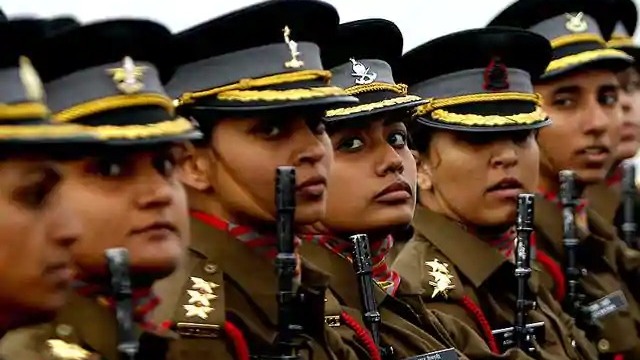
WOMEN IN COMBAT

In today’s  world ,where woman are competing with men in almost every field  opened up to them & defying patriarchal norms What problems does it present to Indian Army from inducting them into combat roles?  Or are the red flags raised only to create a reef ?

In this blog I will  try to answer this question to the best of my knowledge not with a misogynistic view and leave it to readers’ discretion.

Women a symbol of care and seen as Mother , Sister, Daughter & a Goddess in patriarchal Indian  society  was deprived of education and universal adult franchise long until Independence. After Republic of India was formed they were encouraged, promoted & given reservations over subsequent years in different service sectors except armed forces until 1993 when their induction began into Air force , Navy & Army.

Today women comprise of 13% in Air force, 6% in Navy and 3% in Army. Their roles being restricted to support corps. Challenges it present to broaden their role are

A) Physical limits for a man and woman are different. Body types , body shapes and testosterone make all the difference. Men have 40% & 33% more muscle mass in upper and lower body compared to women. Not only that former’s muscle are stronger pound for pound by about 10%.

Risk of injuries to women in training is also as high as 30% as that to 10% in men and this too not in highly specialized combat or commando  training but rather in milder versions of it.

Though I think physical limits are least important constraints as it is easiest trainable entity if we have time , but that is the question. Do we have time? Training period for women candidates is 1 yr at max it can be stretched to one and a half year to equal out with training period of male IMA cadets but is it enough for a average Indian girl ,who most probably haven’t played any sport for years and is not a MARY KOM OR GEETA PHOGAT to replace a rather better fit candidate in combatant role just for the sake of female representation at borders. It takes Years to make a MARY KOM ,who is tougher than most of the guys and can whop any boys ass in a fight but we dont have Years . More than that metal capabilities are also equally important as physical attrosciousness which is hard to find. Even if we get a girl who can get as aggressive as a boy and is tougher than him social factors play in …

B)  In combat operations and border outposts conditions are harsh. Officers and men live in a 3 * 3 tent . Their are no washrooms 76% of our posts dont have basic facilities like clean drinking water, good food , electricity or all requisite medical facilities unlike that of european or developed countries. Imagine a girl coming from  tier 2& 3 cities staying with men coming predominantly from villages in such harsh conditions. Where their are no medical facilities to cater for her special needs nor bathrooms.

Our social environment is not as modern as that of scandinavian countries to let both genders sleep in on tent. Boys & girls in villages hardly interact altough situation is a bit better in metro cities but that is not where majority of soldiers come from. Generals of  US forces have also highlighted the fact of behavarioul changes in guys when a girl is brought into the group.

Behind the closed doors, boys hold each others back .Things are done without being said. The bonds are very deep but a woman officer in the gang may change these dynamics. Possibility of acts of indiscipline in animal like conditions cannot be ignored.

C) Change is essence of existence and things must only change if current state is not good or if the act brings any improvement. Neither of the above two conditions seem to follow if women are put in combat shoes. Men are doing very well and so are women providing them support to carry out their jobs efficiently. And support role is not second to any. Not all male officers are in infantry, armoured core or mechanised infantry , these doesn’t mean that they don’t serve their country or are not bravehearts.

Thank you.


“PM NARENDRA MODI A TRENDSETTER IN DIPLOMACY” – AMBASSADOR AMIT DASGUPTA (RETD)

This is my first blog, forgive me for any mistakes. This blog talks about lecture on ‘challenges in security & diplomacy’ by Ambassador amit dasgupta (retd) at Department of Defence and Strategic Studies at Savitrbai Phule Pune University. The event was chaired by AIR MARSHALL BHUSHAN GOKHALE(Retd).

Ambassador dasgupta talked about risk assessment  in the domain of diplomacy. He showed his admiration to former PM ATAL BIHARI VAJPAYEE for his decision to shake hands with President Gen. Pervez Musharraf, when the later offered handshake to the former in midst of turbulent times on an International stage after Kargil war, If PM Vajpayee wouldn’t have shook hands ,it would have conveyed that India is not ready for talks despite Pakistan making the first move but the problem with PM vajpayee shaking hands was that it would have signified India is ready to talk. PM Vajpayee analysed the risk , shook his counterparts hand but the talks never happened. Mr. Vajpayee was sharp enough to understand and react to this gesture of warmth smartly.

Mr. Dasgupta also talked about new trend in diplomacy where world leaders prefer to talk to each other directly on telephone rather than following path  suggested in Vienna convention. This new trend has it’s pros and cons. He also talked about uncertainty in world politics whose trendsetter has been President Donald Trump. He significantly stressed on requirement of specialists in diplomacy to take immediate and foresighted decisions.

Air Marshall Gokhale’s(Retd) praised PM Modi for his efforts to improve diplomatic ties with neighbours and International community. The trend set by PM Modi to set up friendly relations with other by changing diplomatic procedures is rather good was a mild argument put up by him in soft words.

In recent years India has made some new allies like USA, Israel and have deepened relations with Gulf and African countries. On the other hand it’s relations with old brothers like Nepal, Maldives & Sri lanka has seen a little upsetting trend. All this is because two reasons

1) China’s excellent diplomacy in these states supported by its regular economic aid to these countries &

2) India’s habit to rub the nose and let other states know that we are there for them even when they know we are there.

India had no need to beat it’s chest and let Nepalese know that we are there to help them in times of massive earthquake. Neither did they ask India to make a Constitution for them ,even then we offered them. Initiatives of building roads and other infrastructure promised by India is on the drawing pages. Reasons like this are impedimenting diplomatic and security success of the Indian state.

Thank you

Note –  please don’t hesitate to bring any grammatical or informative mistake to my notice.